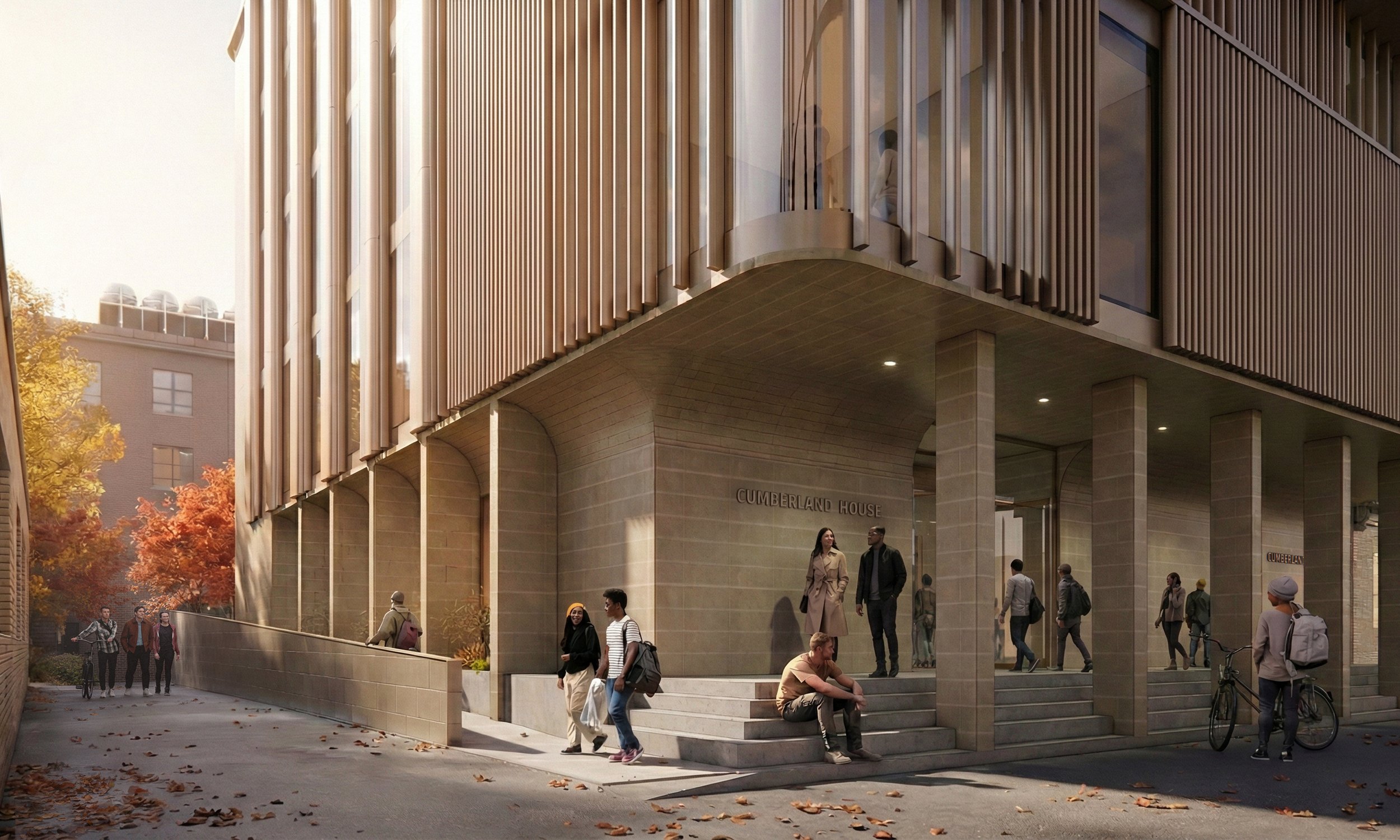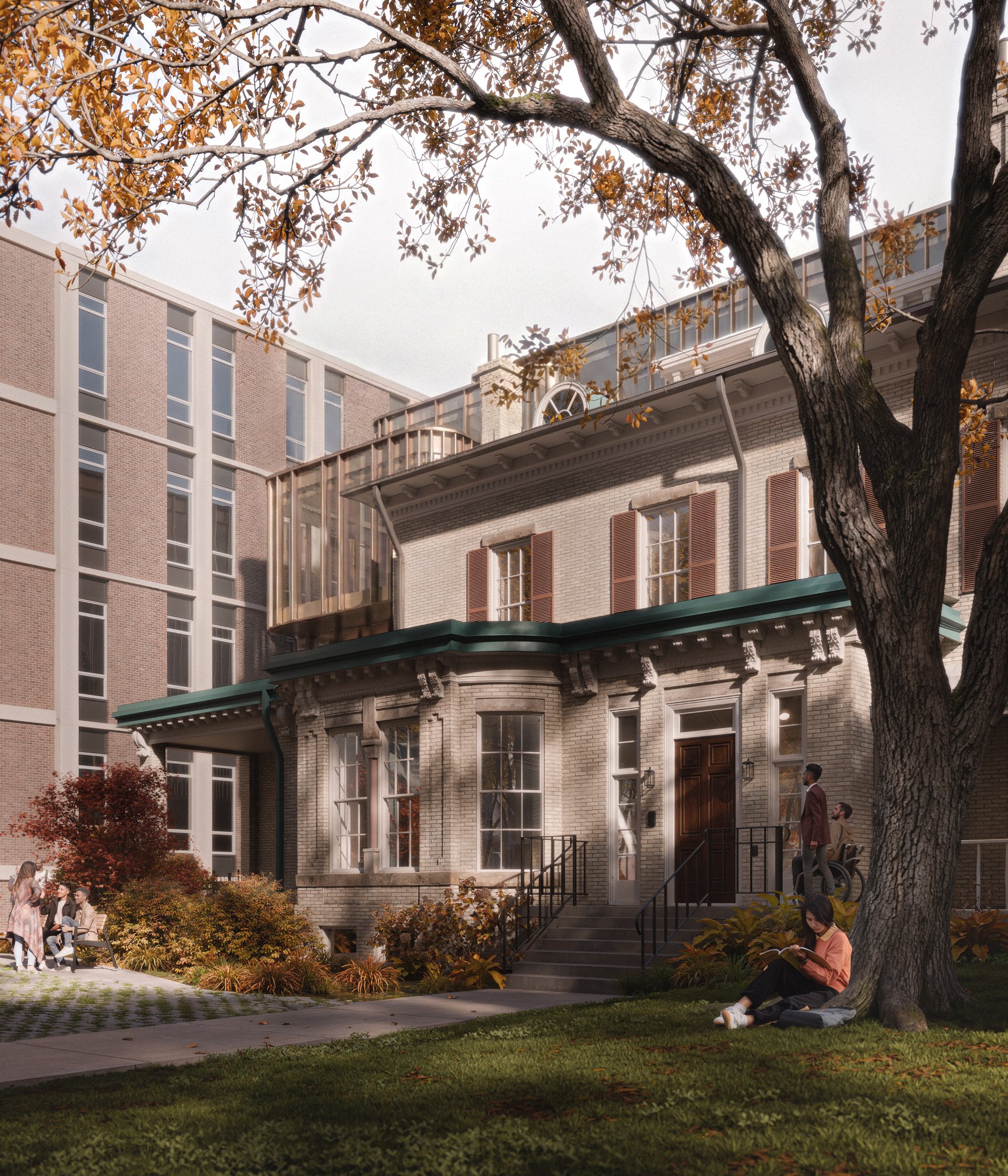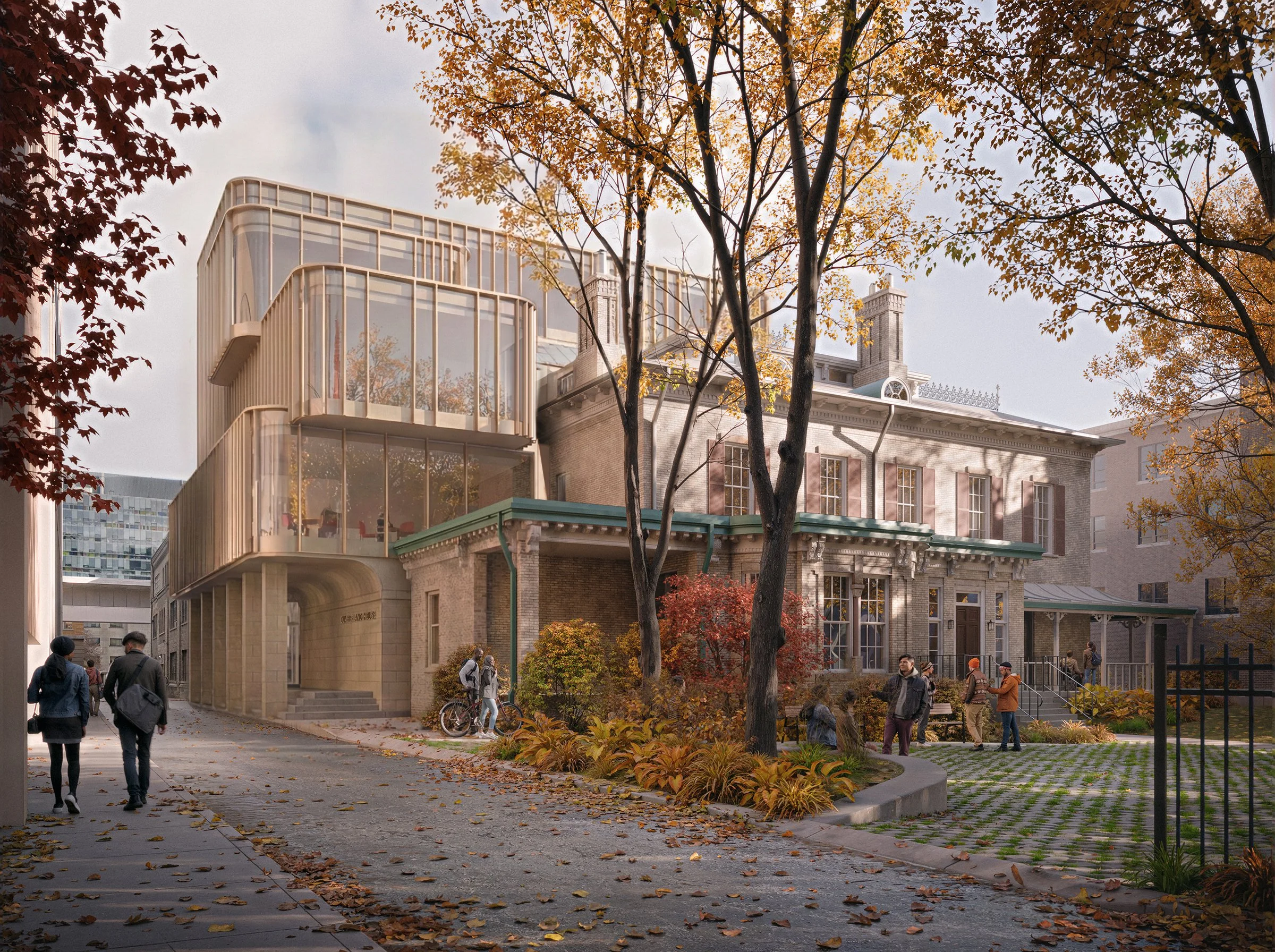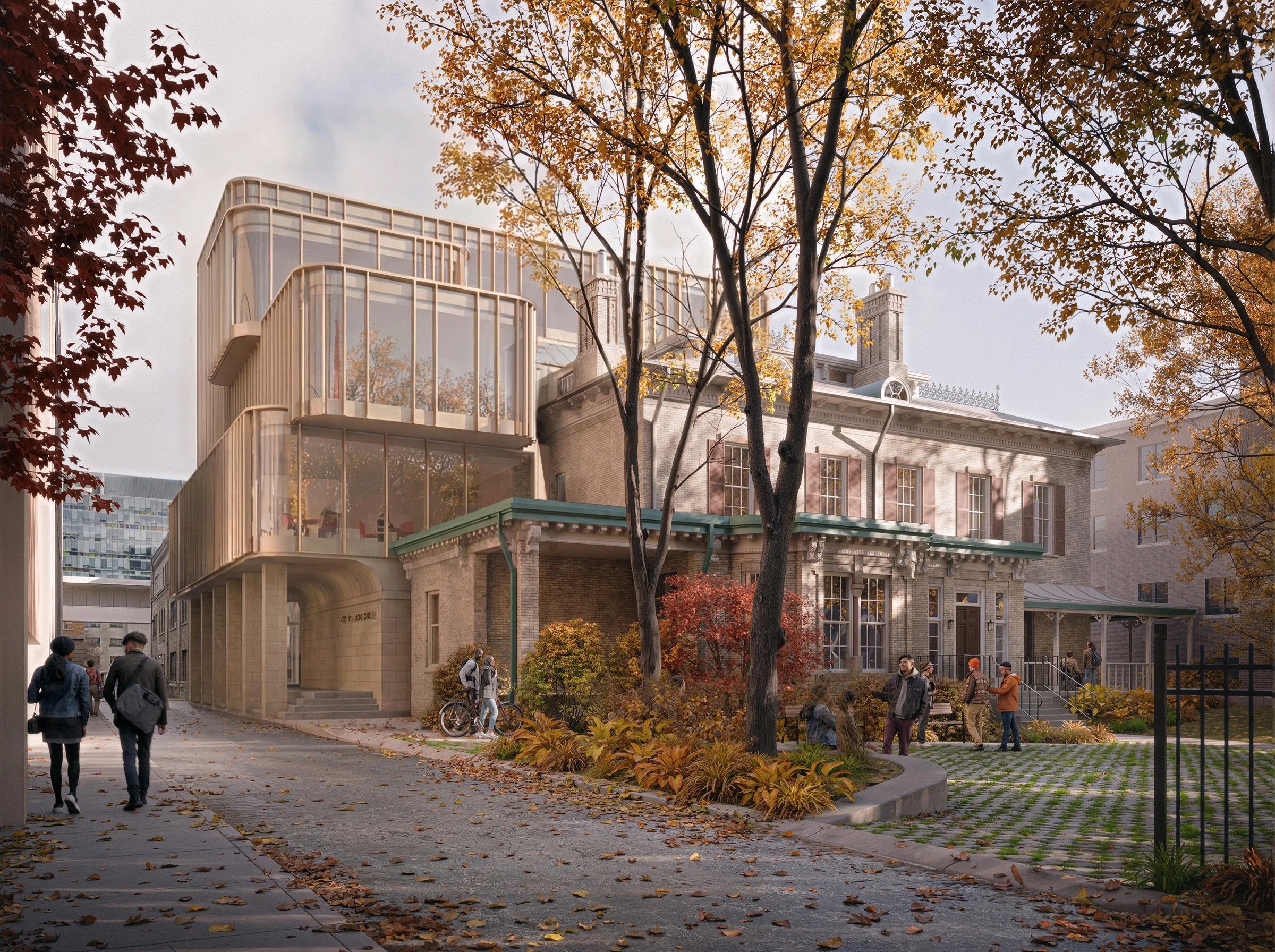
Cumberland House, built in 1857 as the Italianate residence of architect Frederic Cumberland, is one of the University of Toronto’s most significant listed heritage assets. The building’s exterior, along with the ground and second floor interiors, forms part of its protected heritage fabric, creating a highly constrained environment for contemporary academic use.
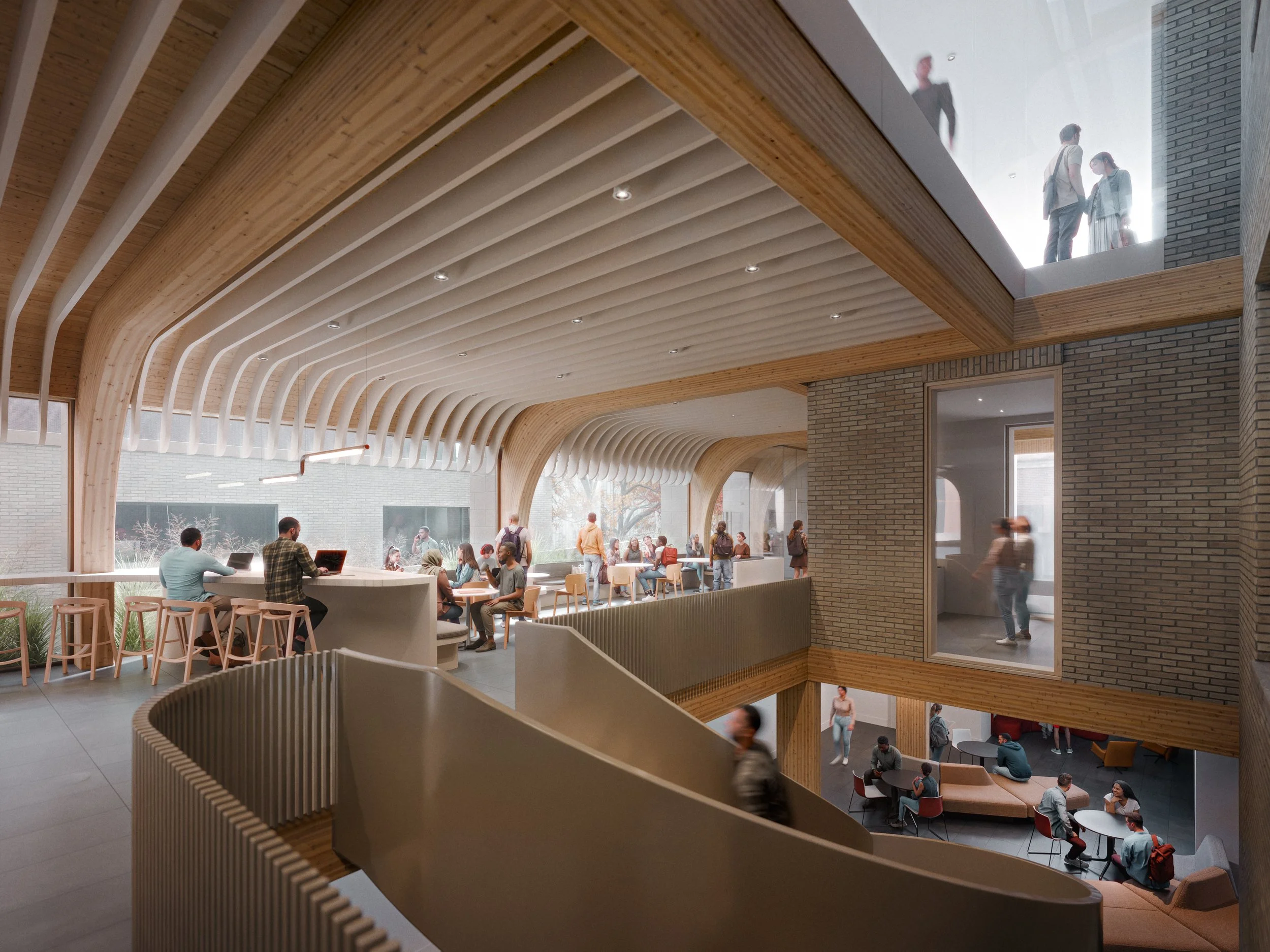
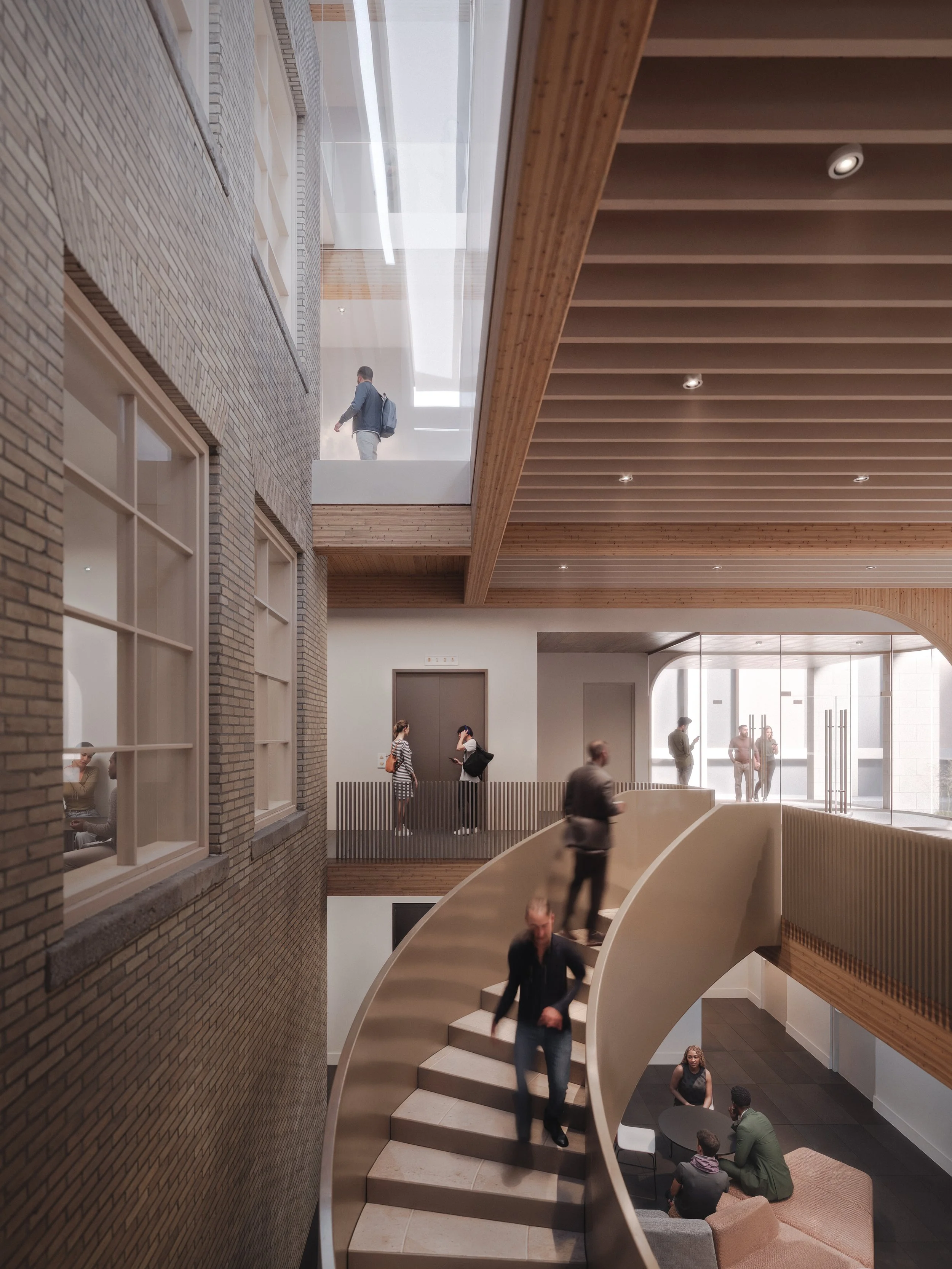
The project addresses the challenge of introducing inclusive, student-facing spaces, collaborative work areas, and consolidated administrative functions within a conserved envelope.
The feasibility study repositions Cumberland House as a unified academic hub, integrating the Centre for International Experience, the Office of the Vice-President, International, and the School of Graduate Studies within a single, accessible environment. The strategy balances preservation with transformation, aligning new program requirements with the spatial logic and material character of the existing structure while identifying targeted interventions to improve circulation, accessibility, and program clarity.
Central to the proposal is a new four-storey addition that enables full accessibility and provides the spatial capacity required to consolidate dispersed functions. Conceived as a contemporary counterpart to the historic building, the addition establishes a clear distinction between old and new while maintaining a complementary scale and material presence. Within the existing structure, interventions are selective and precise, preserving heritage fabric while adapting spaces to support a range of formal and informal uses.